
 English
 Español

A preservative system is the combination of preservatives, pH control and packaging decisions that keeps water-containing body care — lotions, shower gels, body butters — microbiologically safe for its entire shelf life. For private label buyers the decision comes down to four questions: which preservative base, at what pH, proven by which challenge test, and declared how on the label. Answer them early, because the preservative system touches formulation cost, marketing claims, regulatory approval and launch timing all at once. This guide explains the systems you will meet, the chemistry that constrains them and the questions to ask your OEM factory.
Why the Preservative Decision Shapes the Whole Program
Any product that mixes water and oils needs protection against bacteria, yeasts and moulds. Get the preservative system wrong and the consequences arrive late: a failed challenge test weeks before launch, a claim that cannot be substantiated in the European Union, or a reformulation that restarts stability testing and delays the order. The commercial stakes keep rising. According to Grand View Research, the global luxury bath and body products market was valued at USD 19.0 billion in 2025 and is projected to reach USD 32.9 billion by 2033, a compound annual growth rate of 7.1% — more brands competing on shelf means less tolerance for a product that grows mould in a warehouse. Preservative choices also lock in other decisions: a system that only works below pH 5.2 narrows your active ingredients, and a "preservative-free" claim restricts you to anhydrous formats. If you are still deciding between development models, our overview of private label, white label and OEM/ODM explains who owns each of these decisions.
The Preservative Systems You Will Meet in Body Care
Most private label body care programs use one of four approaches, sometimes blended:
- Phenoxyethanol-based blends. The workhorse of the category, usually paired with ethylhexylglycerin or similar boosters. It is effective across a wide pH range and accepted in the EU, the US and most export markets, with the EU capping it at 1.0%. It suits lotions, shower gels and most emulsions without constraining fragrance or actives.
- Organic-acid systems. Benzoic acid, potassium sorbate and dehydroacetic acid are preservatives listed in Regulation (EC) No 1223/2009 Annex V that appeal to "clean label" positioning. Their limit is chemical, not regulatory: they lose efficacy above roughly pH 5.2, so they fit toners and low-pH gels better than rich body butters.
- Parabens. Contrary to widespread marketing language, several parabens remain legal and widely used in the EU under Annex V concentration limits and are broadly accepted in the US and Latin America. They are effective, cheap and well documented — but in parts of Europe retail buyers may reject them for perception reasons, so the destination market decides, not the chemistry.
- Multifunctional "hurdle" systems. Ingredients like glyceryl caprylate, caprylhydroxamic acid and certain aroma compounds contribute mild antimicrobial activity, allowing low-total-preservative formulas. These need the most testing support, because each new hurdle combination is a fresh microbiological question.
One further distinction matters for the wider category: anhydrous products — body butters, bath oils, bath bombs, bath salts and scented candles — contain no water and therefore need no water-phase preservative at all. They still need controls against contamination during filling and use, which is a GMP question rather than a formula question.
pH, Water Activity and the Limits of Chemistry
A preservative can only work inside its pH window. Phenoxyethanol is tolerant of typical skin-care pH values; organic acids are not, and a formula adjusted to pH 6 for an active ingredient can silently disable a sorbate-based system. This is why the preservative conversation belongs at the brief stage, together with the target pH and the actives list, rather than after the first lab sample. Packaging interacts with preservation too: a jar that customers open with wet fingers repeatedly re-inoculates the product, while an airless pump or a flip-top bottle reduces that exposure. The same formula can pass a challenge test in a bottle and fail in a jar, so packaging should be fixed before the final microbiological validation, not after. Our guide to the private label sampling and development process shows where these decisions belong in the project calendar.
Proving It Works: Challenge Testing and Stability
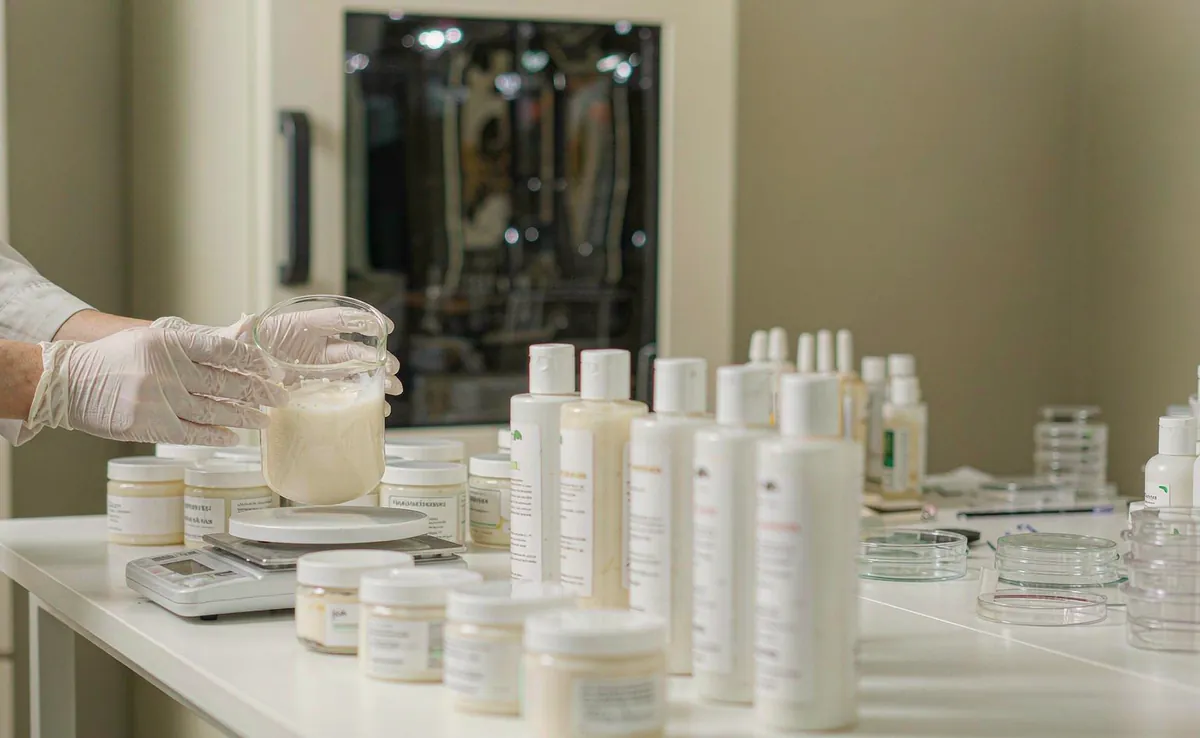
On paper, every preservative system works. The proof is a microbiological challenge test, standardised in ISO 11930, in which the finished formula is deliberately inoculated with bacteria, yeasts and moulds and monitored over weeks to confirm the system kills them off. Reputable manufacturers run this test on every new water-containing formula and repeat it whenever the formula, fragrance or packaging changes, because even small changes can shift preservative availability. Challenge testing runs alongside accelerated stability testing, which checks that the emulsion, colour and pH hold up over the claimed shelf life. Ask the factory which tests are performed in-house and which are outsourced to accredited laboratories, and ask for the reports — they feed directly into the safety assessment described below.
The Regulatory Frame: EU and US
In the European Union, Regulation (EC) No 1223/2009 governs which preservatives may be used and at what concentrations through its Annex V positive list, and requires a safety assessment of the finished product by a qualified assessor plus a designated responsible person before the product is placed on the market — a framework summarised by the European Commission's cosmetics sector page. In the United States, the Modernization of Cosmetics Regulation Act (MoCRA) adds facility registration and product listing with the FDA, while the safety substantiation remains the brand's obligation. Underpinning both markets, ISO 22716 good manufacturing practice keeps the documentation — batch records, water testing, equipment cleaning — consistent enough to survive an audit. A preservative system that is elegant but undocumented is a liability; the file matters as much as the formula.
Handling "Preservative-Free" and "Natural" Claims
Claims sell, but they narrow the program. A true "preservative-free" claim is only realistic for anhydrous products or single-use formats; a water-based lotion without preservation is a safety risk, not a marketing asset. "Naturally preserved" claims usually mean multifunctional ingredients with mild antimicrobial activity, and they need the same challenge-test proof as any conventional system. In the EU, claims must also meet common criteria for truthfulness and substantiation, so the wording belongs in the compliance review together with the label. Our article on cosmetic labeling rules in the EU and US covers how claims and mandatory declarations fit together on the pack.
Questions to Ask Your OEM Factory
Before committing to a body care program, put these questions in writing:
- Which preservative systems are available in your base formulas, and at what pH windows?
- Do you run ISO 11930 challenge tests in-house or through an accredited external laboratory?
- How do you re-validate preservation when we change fragrance, packaging or actives?
- Can you document GMP controls under ISO 22716, including water quality and batch records?
- Which claims can you substantiate for our destination market, and who signs the safety assessment?
The quality of the answers tells you more about the factory than any sample. Our OEM manufacturer buyer's checklist lists the broader questions worth asking before you shortlist a supplier.
Preservative Systems: Quick Answers
Are parabens banned in Europe?
No. Several parabens remain authorised in the EU under Annex V of Regulation (EC) No 1223/2009 with defined concentration limits, and a small number of longer-chain parabens were banned years ago. The practical constraint is commercial: some European retail buyers avoid parabens for perception reasons. Follow your target market's requirements, not generic marketing claims.
Can a natural body care product still be safely preserved?
Yes. Natural and naturally derived preservatives and multifunctional boosters can protect a formula, but they usually need tighter pH control and confirmed challenge-test results. "Preservative-free" is only credible for water-free products such as body butters, bath bombs, bath salts and candles.
Who is responsible for product safety, the brand or the factory?
Both, in different roles. The factory supplies formula data, test reports and GMP documentation; in the EU the designated responsible person — usually the brand or its import — holds the product information file and the safety assessment. Agree in writing who prepares and who owns each document before sampling starts.
Start Your Body Care Program With Besthope Bath
Besthope Bath is a bath bomb, body care, gift set, bath salt and scented candle OEM/ODM manufacturer based in Quanzhou, China, producing under GMP-aligned processes with ISO 22716-referenced quality management and audited social compliance, including amfori BSCI and Walmart responsible-sourcing audits. Send us your product brief, destination market and first-order volume, and we will return a costed development plan covering preservative options, testing scope, packaging and lead times. Contact our team to discuss your body care project.