 English
 Español
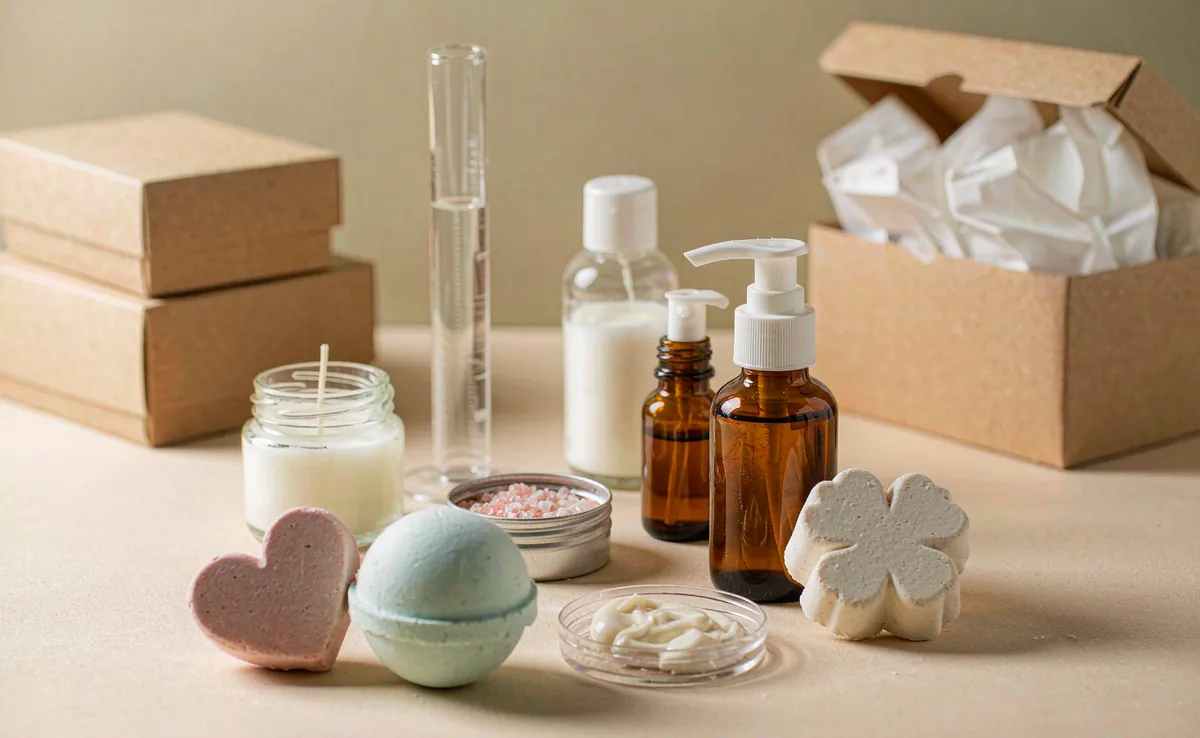
The private label sampling process turns a product brief into an approved, manufacturable formula in six stages: brief, lab samples, stability and compatibility testing, packaging trials, a pilot batch and final sign-off. For bath bombs, body care, gift sets, bath salts and scented candles, sampling typically takes six to twelve weeks and decides almost everything that follows: the fragrance, the texture, the packaging line, the compliance file and the final unit cost. Brands that treat sampling as a formality pay for it in reworked orders; brands that manage it as a project launch on schedule. This guide walks through each stage from the buyer's side of the table.
Why Sampling Deserves More Time Than Buyers Give It
The bath and body category keeps rewarding brands that invest early. According to Grand View Research, the global luxury bath and body products market was valued at USD 19.0 billion in 2025 and is projected to reach USD 32.9 billion by 2033, a compound annual growth rate of 7.1%. More brands competing on shelf means less tolerance for mediocre products, and the sampling phase is the cheapest moment to fix a weak one. Every decision is still reversible: the fragrance can be reformulated, the bath bomb density adjusted, the box resized. Once tooling is cut and bulk production starts, the same changes cost weeks and real money. Understanding whether you need private label, white label or full OEM/ODM development also matters here, because it defines how much of the sampling workload the factory carries and how much stays with you.
Stage 1: The Product Brief
Sampling quality is set by the brief, not by the laboratory. A complete brief tells the factory five things: the destination market and its regulatory requirements, the product format and size, the fragrance direction, the packaging concept, and the commercial frame of target retail price and first-order volume. Reference products, even a photo of a competitor's texture, compress the conversation faster than any adjective. From a good brief, the factory can return a costed development plan: which formula bases are available off the shelf, which components are custom, what each sample round will cost, and when samples will land. Buyers who skip the volume part of the brief discover later that their preferred packaging only makes economic sense above certain order quantities; our guide to negotiating MOQ with OEM factories explains how minimums shape those choices.
Stage 2: Lab Samples and Iteration
The first lab samples usually arrive within one to three weeks for bath products and filled body care, faster when the formula starts from an existing base. Evaluate them against the brief, not against an ideal: fragrance character and strength, texture and absorption for lotions and butters, fizz and hardness for bath bombs, scent throw for candles, colour accuracy and stability of the fill. Consolidate feedback into a single written round, ranked by priority, and return it all at once. Two or three rounds are typical before a formula is approved; more often than that, the problem is usually an unsettled brief rather than an incapable laboratory. Approve each round in writing so both sides know which sample generation is the reference.
Stage 3: Testing and the Compliance File
An approved-feeling sample is not yet a sellable product. Water-containing formulas need stability and packaging-compatibility testing, commonly run in accelerated conditions over eight to twelve weeks, plus preservative efficacy verified with a challenge test aligned to ISO 11930. Bath bombs, salts and candles have their own test set: hardness and drop tests, effervescence and pH for bath products, burn and safety testing for candles. In the European Union, Regulation (EC) No 1223/2009 requires a safety assessment of the finished formula and a responsible person before the product is placed on the market, a framework summarised by the European Commission's cosmetics sector page; in the United States, the Modernization of Cosmetics Regulation Act (MoCRA) adds facility registration and product listing. Good manufacturing practice under ISO 22716 keeps documentation consistent across all of it. Ask the factory which tests it runs in-house and which are outsourced, because that affects both cost and timeline.
Stage 4: Packaging and Filling Trials
Packaging fails in production more often than formulas do. During this stage the factory verifies that your bottle fills and caps cleanly on its line, that the pump doses correctly, that labels and print proofs match the approved artwork, and that gift sets assemble without damage. Rigid boxes get a fit check with the actual components inside, and cartons get a drop or compression check so sets survive freight. This is also where custom tooling is committed: moulds for shaped bath bombs, embossed tins or printed rigid boxes are approved at pre-production stage, and their lead time is the longest single item in most programs. For multi-component programs, our bath gift set wholesale guide shows how packaging choices drive both cost and lead time.
Stage 5: The Pilot Batch
A pilot batch is a small production run executed under real factory conditions: real filling speeds, real drying or curing times, real packing labour. It answers the questions lab samples cannot: does the bath bomb hold its weight uniformity across thousands of units, does the lotion fill without foaming, does the candle wax cool without sink holes. The pilot output usually serves triple duty as sales samples, photography stock and the reference batch for quality control. Approving the pilot batch together with a written specification, including weight tolerances, fragrance level and packaging assembly standards, is what turns "we liked the sample" into a repeatable production standard.
Stage 6: Sign-Off and the Road to Mass Production
Formal sign-off closes the sampling phase: a retained golden sample, a signed specification sheet, agreed AQL inspection criteria and the compliance documentation for the destination market. From here the program moves to bulk production, quality control against the golden sample, and freight booking. Buyers comparing factories at this stage should look beyond the sample itself to how the factory documents decisions; our OEM manufacturer buyer's checklist lists the questions that separate organised manufacturers from improvisers. Confirm the factory's social-compliance credentials too, since amfori BSCI audits are a standard requirement among European retailers.
What Sampling Costs and How Long It Takes
Sampling costs cluster into three buckets: sample fees for formula and product samples, packaging proofs and freight for the samples themselves. Many manufacturers, Besthope Bath included, credit the sampling fee against the first bulk order, so the real cost of a serious sampling program is time rather than money. Timelines depend on how custom the product is: a stock-base formula with existing packaging can move from brief to approved sample in two to four weeks, while a fully custom formula with new moulds and printed rigid packaging commonly runs eight to sixteen weeks including stability testing. Plan the calendar backwards from your launch date and lock the long-lead packaging decisions first.
Private Label Sampling: Quick Answers
How many sample rounds does a private label product need?
Two to three rounds is typical for bath and body products when the brief is specific. The first round establishes the direction, the second corrects fragrance and texture, and the third confirms the final formula. More rounds usually signal an unsettled brief or a mismatch between budget and expectations, both cheaper to fix in the brief than in the laboratory.
Who owns the formula after sampling?
It depends on the development model and the agreement signed before sampling. In white-label programs the factory keeps ownership and licenses the formula to you; in OEM programs built on your recipe, you generally own it; in ODM programs, ownership is negotiated. Put formula ownership, confidentiality and exclusivity terms in writing before the first lab sample is made.
How long from approved sample to bulk delivery?
After sign-off, bulk production for a typical bath bomb or body care order commonly takes four to eight weeks depending on order quantity and component availability, plus ocean freight time to the destination port. Custom rigid packaging ordered late is the most common cause of delay, which is why packaging decisions belong in the first third of the timeline, not the last.
Start Your Sampling Program With Besthope Bath
Besthope Bath is a bath bomb, body care, gift set, bath salt and scented candle OEM/ODM manufacturer based in Quanzhou, China, producing under GMP-aligned processes with ISO 22716-referenced quality management and audited social compliance, including amfori BSCI and Walmart responsible-sourcing audits. Send us your brief, your target market and your first-order volume, and we will return a costed sampling plan: formula options, sample schedule, testing scope and packaging lead times. Contact our team to start your sampling program.