
 English
 Español
Private Label Body Care Manufacturing: Lotion, Shower Gel and Body Butter
Source:www.besthopebath.com
|
Author:Besthope Bath
|
Published time: 2026-10-05
|
14 Views
|
🔊 Click to read aloud
❚❚
▶
|
Share:
Private label body care works differently from bath bombs: lotions, shower gels and body butters are water-based formulas that must be preserved, challenge-tested and documented before they ship. Here is how an OEM body care program runs, from brief to loading.
Private Label Body Care Manufacturing: Lotion, Shower Gel and Body Butter
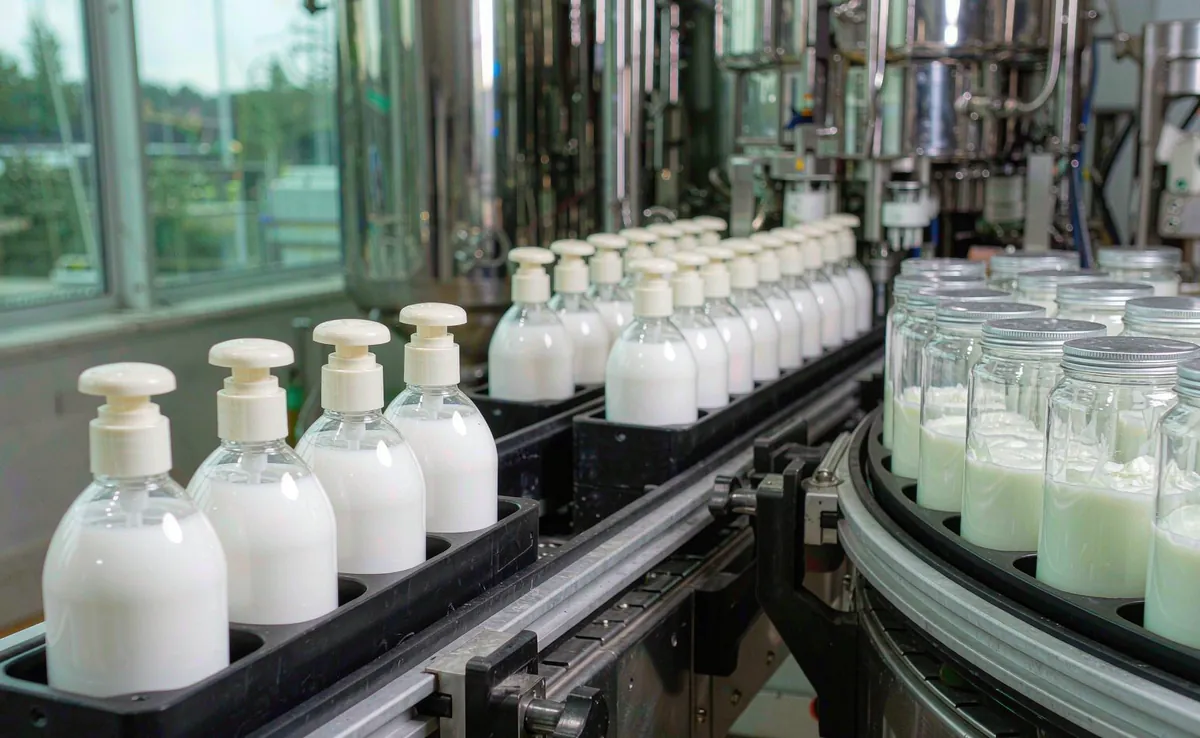
Private label body care succeeds or fails on three decisions made before sampling: the format (lotion, shower gel or body butter), the preservation system, and the packaging. Unlike bath bombs, these are water-based products that must be challenge-tested, stability-proven and documented for each target market. Here is how a professional OEM body care program runs from brief to shipment.
Quanzhou Besthope Household Products Co., Ltd. (Besthope Bath) is an OEM/ODM manufacturer of body lotions, shower gels, body butters, bath bombs, bath salts, scented candles and gift sets, producing under GMP aligned with ISO 22716 cosmetics GMP, with amfori BSCI social-compliance audits, Walmart factory-audit experience, FDA-compliant documentation for US buyers and an in-house laboratory for formulation, stability and microbiological testing. We build private label body care lines for retailers and brand owners across Europe and Latin America; this guide answers the questions buyers ask before committing to a first body care order.
Why Body Care Is a Different Manufacturing Problem
Body care is one of the fastest-moving corners of the bath category. According to Grand View Research, the global luxury bath and body products market is projected to reach USD 28.65 billion by 2030, expanding at 7.9% a year between 2022 and 2030 — and body lotions and creams are forecast to post the fastest growth of any product segment. That growth is pulling a new wave of brands into a category that is technically harder than bath bombs or bar soap.
The difference is water. A bath bomb is essentially anhydrous: with almost no free water it is inherently hostile to microbial growth. A body lotion is an oil-in-water emulsion — typically 60–80% water — living in a warm bathroom and opened dozens of times during its service life. Shower gels are high-water surfactant systems, and body butters, although oil-dominant, are often packed in wide-mouth jars that invite contamination with every dip of a finger. Every one of these formats depends on a correctly designed preservation system, and that is a formulation decision to be made with the factory’s chemists — not a label to add at the end.
Fix These Five Specifications Before Sampling
Buyers who change the brief mid-development lose the most time. Before the first laboratory sample, agree on:
- Format and viscosity. Pumpable lotion, thick cream, clear or pearlised shower gel, whipped body butter — viscosity drives the filling line, the pump-versus-jar decision and the unit cost.
- Fragrance direction. Fragrance load and allergen profile shape EU labelling; the scent must be fixed early because it interacts with both the emulsifier and the preservative system.
- Actives and claims. Every claim that appears on the label must be substantiated inside the product information file. Choose claims the documentation can defend.
- Packaging. Stock bottles, pumps and jars are the fast path to market; fully custom tooling changes the cost curve and the calendar at the same time.
- Preservation philosophy. Broad-spectrum conventional, low-preservative with water-activity control, or a marketing-driven “free from” position — decide it with the formulator, not against them.
Formulation and Fill Formats: Lotion, Shower Gel, Body Butter
The three core body care formats are different engineering problems that happen to share a filling hall. A body lotion is an oil-in-water emulsion stabilised by emulsifiers, with its skin feel tuned by the oil phase, the emulsifier pair and rheology modifiers; it is filled at warm temperature into pump bottles that protect the emulsion from repeated finger contact. A shower gel is a surfactant system — the formulation work is mildness, foam quality and clarity, and the main production variables are viscosity control and fragrance stability in a high-water matrix. A body butter is oil-dominant and often anhydrous, whipped or poured into jars; because it contains little or no free water it is the least microbiologically demanding of the three, which is why jar packaging is commercially acceptable for butters while being a liability for lotions.
For a brand, the practical consequence is this: the same factory can produce all three, but each format carries its own MOQ band, its own filling tolerances and its own testing path. Brands launching a coordinated “shower, hydrate, seal” routine should therefore lock one fragrance direction across formats and let the factory phase the SKUs — starting with the format whose packaging and testing are already proven.
Preservation, Stability and Challenge Testing
For any water-containing cosmetic sold in the EU, adequate preservation must be demonstrated. ISO 11930:2019 is the international reference method: the finished product is inoculated with defined strains of bacteria, yeast and mould and monitored over 28 days, with acceptance based on log reduction — Criterion A being the strict standard, and the more permissive Criterion B allowed only with documented justification in the safety assessment. Products classed as microbiologically low-risk under ISO 29621 — anhydrous oils, high-alcohol formats, powders — may be exempt, but the exemption has to be reasoned and documented by the safety assessor, never assumed by the brand.
Stability testing runs in parallel: accelerated and real-time studies confirm that the emulsion does not separate, viscosity holds, colour and fragrance stay true and the packaging is compatible with the formula. The period-after-opening symbol and the shelf life printed on the carton both trace back to this work. In our experience the safest schedule reserves four to six weeks for the full testing cycle, run alongside packaging decisions — the most expensive failure mode in body care is discovering a failed challenge test after the bottles have already been ordered.
MOQ, Tooling and Lead Times
Realistic entry points for private label body care with stock packaging typically start at 3,000–5,000 units per SKU; custom-printed bottles, caps and cartons raise the floor, while additional SKUs that share the same bottle and filling format get progressively cheaper. Tooling is the other lever: pumps and jar lids are often the long-lead components, so selecting stock components early protects the calendar even when the formula is still in testing.
A workable timeline from approved brief to goods on the water runs roughly three to four months with stock packaging: one to two weeks for quotation and brief lock, two to four weeks of laboratory sampling, four to six weeks of testing and artwork in parallel, then 30–45 days of mass production and booking. The commercial side of those numbers — how to negotiate bands, split SKUs and stage re-orders — is covered step by step in our MOQ negotiation guide, and factory-side due diligence in our buyer’s checklist for choosing an OEM manufacturer.
Compliance Documents by Market
- European Union. Regulation (EC) No 1223/2009 requires a product information file and a Cosmetic Product Safety Report signed by a qualified safety assessor before a product is placed on the market, plus notification through the EU CPNP portal by the responsible person. Our guide to the regulation for bath and body brands walks through each document: EU 1223/2009 practical guide.
- United States. The Modernization of Cosmetics Regulation Act (MoCRA) added mandatory facility registration and product listing with the FDA, safety substantiation records and serious adverse event reporting. In its 2026 implementation update the FDA reported more than 15,000 active cosmetic facility registrations and over one million product listings — registration is now table stakes for US retail.
- Manufacturing standards. ISO 22716 GMP governs the factory floor: batch records, water system monitoring, weighted checks and retained samples. Your laboratory package — certificates of analysis, challenge test report, stability summary — is what the assessor and the retailer will ask for.
- Social compliance. amfori BSCI audit reports and Walmart factory-audit experience support retail and marketplace onboarding in Europe and North America, and are increasingly requested by Latin American chains as well.
Where the Unit Cost Actually Goes
In a body lotion or shower gel, the formula is rarely the biggest cost lever — packaging and filling complexity usually are. A pump costs more than a flip cap, a wide-mouth jar more than a tube, and a heavy glass vessel more than both. Fragrance percentage moves cost noticeably at loads above 1–2%, actives move it further, and every additional SKU multiplies artwork, moulding and minimum-order commitments. The brands that hit their landed cost target are the ones that fix packaging before fine-tuning the formula, keep the first launch to two or three SKUs, and reserve custom tooling for the re-order once sell-through is proven.
Frequently Asked Questions
What MOQ should I expect for private label body care?
With stock bottles, jars and pumps, 3,000–5,000 units per SKU is a realistic entry point; custom packaging or unusual formats raise the minimum. Splitting a run across several SKUs is feasible when they share the same base formula and filling format.
Do body lotions and shower gels need a challenge test?
Water-containing formats almost always do. Under EU Regulation 1223/2009 the safety assessor requires evidence of adequate preservation inside the CPSR, and ISO 11930 is the accepted way to provide it. Anhydrous products such as oil-based body butters may qualify for a documented low-risk exemption under ISO 29621.
Who is the responsible person for EU compliance?
The EU-established brand or entity named on the label — not automatically the factory. Many buyers appoint their EU distributor or a compliance service; Besthope Bath supplies the technical package the responsible person needs, including the CPSR support file, test reports and label review.
How long does a private label body care program take?
From approved brief to goods on the water, plan for roughly three to four months with stock packaging: two to four weeks of sampling, four to six weeks of testing and artwork running in parallel, then 30–45 days of production. Custom tooling adds lead time at both ends.
Planning a private label body care line? Send your target market, formats and estimated volumes through the Besthope Bath contact page — our team will return a formulation shortlist, packaging options with MOQ bands for each format, and the compliance documentation package described in this guide.
Quanzhou Besthope Household Products Co.,Ltd
Add:Chengnan Central Industrial Zone, Hui'an County, Quanzhou, Fujian, China
Tel:+86-595-87325398 Fax:+86-595-87325757
Email: luosonghuang@besthopebath.com Web: www.besthopebath.com
For more information, please leave us a message!
Copyright © 2022 Quanzhou Besthope Household Products Co.,Ltd. All Rights Reserved.
Images are sourced from the internet. If there is any infringement, please contact us for removal.