
 English
 Español
Soy, Coconut or Paraffin? Choosing the Right Wax for Private Label Scented Candles
Source:www.besthopebath.com
|
Author:Besthope Bath
|
Published time: 2026-09-28
|
25 Views
|
🔊 Click to read aloud
❚❚
▶
|
Share:
There is no single best candle wax for private label candles: paraffin wins on cost and hot scent throw, soy on renewable appeal and slower burn, coconut on premium performance. Most commercial scented candles are engineered blends. Here is how to pick the right base for your line.
Soy, Coconut or Paraffin? Choosing the Right Wax for Private Label Scented Candles
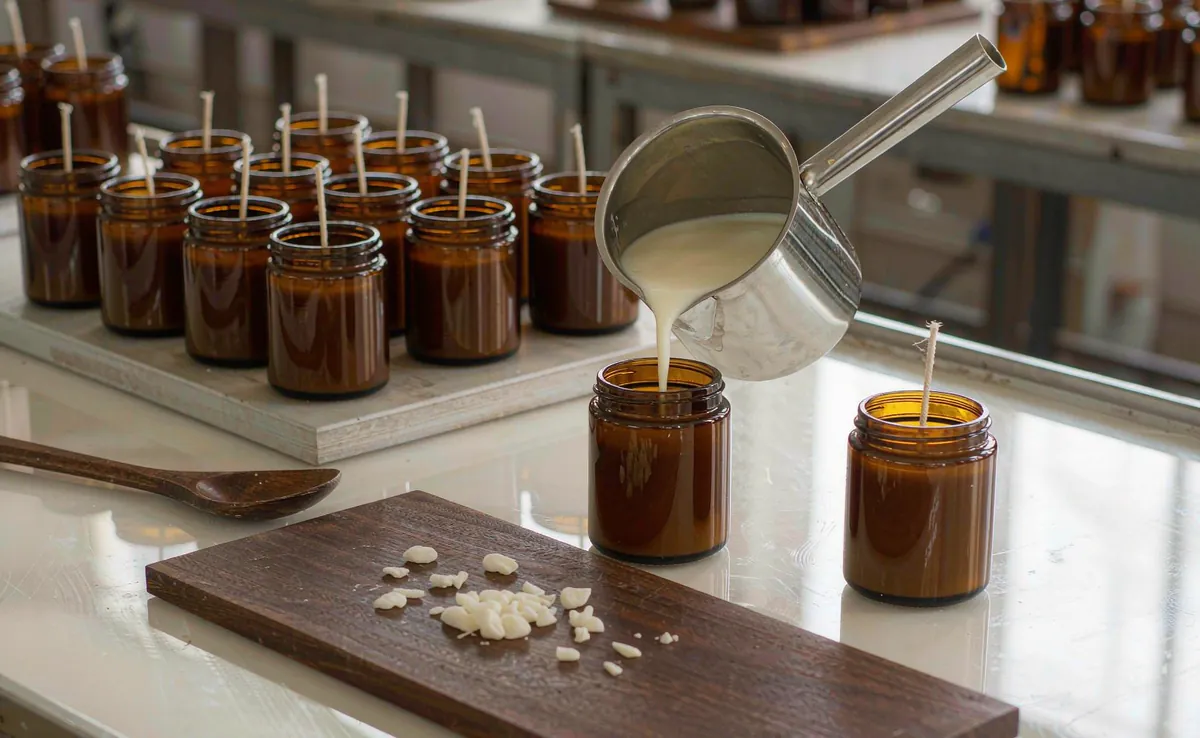
There is no single “best” candle wax for a private label program: paraffin wins on cost and hot scent throw, soy wins on renewable appeal and slower burn, and coconut wins on premium performance and fragrance load. Most commercial scented candles are engineered blends of these bases. Choose the wax after fixing your price point, positioning and target market — not before.
Quanzhou Besthope Household Products Co., Ltd. (Besthope Bath) is an OEM/ODM manufacturer of scented candles, bath bombs, bath salts, shower gels, body lotions and gift sets, producing under GMP aligned with ISO 22716 cosmetics GMP, with amfori BSCI social-compliance audits, Walmart factory-audit experience, FDA-compliant documentation for US buyers and an in-house laboratory for formulation and burn testing. We build private label candle programs for retailers and brand owners across Europe and Latin America; this guide compiles the wax questions buyers ask before committing to a first order.
Why Wax Is a Commercial Decision, Not a Technical Footnote
Scented candles have moved from seasonal gift to everyday self-care. Grand View Research values the global scented candles market at USD 2.24 billion in 2024, rising to USD 3.47 billion by 2033 (about 5.2% CAGR), with Europe projected to grow around 5.5% a year over the same period. And the buying driver is no secret: National Candle Association research finds that nearly three-quarters of candle buyers rate scent as extremely or very important when choosing a candle.
The wax base sits underneath every one of those decisions. It shapes how well fragrance fills a room (hot throw), how long the candle burns, what the unit cost looks like at your price point, which sustainability claims you can defend, and how the product survives a five-week sea crossing. Wax is not a detail to fix after branding — it is the branding, expressed in material form.
Paraffin: The Cost-Effective Workhorse
Paraffin wax is refined from petroleum and remains the most widely used candle wax worldwide — and for commercial private label programs it keeps winning briefs for concrete reasons:
- Excellent hot throw. Paraffin carries fragrance oil efficiently and releases scent strongly as the pool melts — the property buyers actually notice on a store shelf test.
- High fragrance load. Paraffin systems commonly accept around 10% fragrance load, more than most pure natural waxes tolerate.
- Format versatility. It performs in containers, pillars and blends, and takes color and surface finish predictably.
- Cost at scale. For mass-market price points, paraffin usually delivers the lowest unit cost for a given specification.
Two considerations keep buyers honest: paraffin is fossil-derived, which matters to part of the European audience, and combustion quality depends on formulation — the European standard EN 15426 exists specifically to measure candle sooting behaviour. A well-refined paraffin with a correctly matched wick burns cleanly; a badly matched one will soot regardless of wax family.
Soy: The Renewable Storyteller
Soy wax is made from hydrogenated soybean oil — renewable, biobased and the default choice when “natural” is central to the brand story. Its practical profile:
- Slower, cooler burn. Soy’s lower melt point typically gives a longer burn time per gram — a genuine on-pack claim.
- Softer texture. Pure soy is soft and prone to frosting (white crystalline patches) and rough tops; that is chemistry, not defect. Commercial “soy” candles are usually soy blends hardened for stability.
- More modest hot throw. Soy systems typically run fragrance loads around 6–10% and throw less aggressively than paraffin; wick and formula engineering matter more.
- Cure time. Soy candles typically need one to two weeks of curing before hot throw is evaluated — plan the production calendar around it.
Coconut: The Premium Performer
Coconut wax is the newest mainstream base: very soft, almost always blended (coconut-soy is the industry workhorse blend) and positioned at the premium end. It accepts high fragrance loads, burns slowly and cleanly, and carries a credible natural-origin story. The trade-offs are price — coconut wax costs meaningfully more than soy or paraffin — and a supply chain concentrated in Southeast Asia, which buyers should reflect in lead-time planning. For premium gift programs where the candle itself is the hero product, coconut-soy blends are usually the strongest option.
Why Most Commercial Lines Are Blends
Walk a trade show and you will find few candles that are a single pure wax. Real programs blend bases to balance throw, burn time, stability and cost — a soy-paraffin blend can keep a natural story with better hot throw; a coconut-soy blend pushes premium performance. The lesson for buyers: decide the marketing claim first (“100% soy” is a real positioning with real constraints), then let the factory engineer the formulation to it. Reversing the order — demanding one wax name and one price and one performance level — is how programs end up disappointing on shelf.
Choosing the Base: Five Levers That Actually Decide It
- Positioning and price point. Mass retail favors paraffin or soy-paraffin blends; premium gift favors coconut-soy. Fix the shelf price before the wax.
- Scent performance. Hot throw is the single most decisive attribute for buyers — test candidate waxes with your actual fragrance system, not with a generic demo scent.
- Format and burn time. Container versus pillar decides wax hardness; wick selection is wax-specific and validated by burn testing, not by catalog.
- Claims you can defend. The EU has no legal definition of a “natural candle”; sustainability claims must be accurate and substantiated under general consumer law. A blend honestly marketed often beats an overstretched pure-wax claim.
- Logistics. Lower-melt-point waxes soften in summer sea freight from China; container formats with stable blends and disciplined packing survive the five-week crossing better. Cure time (especially soy) extends the production calendar.
Compliance and Testing Before You Scale
- General Product Safety Regulation (EU) 2023/988, applicable since 13 December 2024, requires consumer products including candles to be safe and traceable to an EU-established economic operator — see the GPSR text on EUR-Lex.
- CLP Regulation (EC) No 1272/2008: where the fragrance system classifies as hazardous, candles carry CLP hazard labels (pictogram, signal word, warnings) — Regulation text.
- European candle standards: EN 15493 (fire safety), EN 15426 (sooting) and EN 15494 (safety labels) via CEN — aligning the program to them is the practical way to evidence safety.
- Fragrance compliance: every fragrance oil should come with an IFRA conformity certificate for the candle use level.
- Third-party testing: burn, stability and safety testing by an independent lab such as SGS before mass production — cheap insurance against a full-container recall.
A note on responsibility: the OEM factory supplies formulation data, IFRA certificates and test reports; the importer or brand acts as the economic operator for the EU market and owns the safety file. Split the duties explicitly in the manufacturing agreement.
From Wax Choice to First Container
A realistic path runs: written brief (positioning, shelf price, claims) → wax and fragrance shortlist → samples → burn testing across wick candidates → signed golden sample → mass production and curing → pre-shipment inspection → shipment. The full step-by-step process is detailed in our scented candle OEM guide, and the fragrance side — synthetic versus essential oils — in our natural vs. synthetic fragrances guide. Reserve 10–14 weeks from first inquiry to goods on the water; wax choice rarely delays production, but changing it after sampling always does.
Frequently Asked Questions
Which candle wax holds the most fragrance?
Paraffin and coconut-based blends generally accept the highest fragrance loads; soy typically works in the 6–10% range. The final load is not set by wax family alone — it is validated by burn testing with the specific fragrance system, wick and vessel.
Is soy wax really better for the environment?
It is renewable and biobased, which is a genuine advantage, but soy agriculture carries its own footprint and most commercial “soy” candles are blends. The defensible position is an accurate, substantiated claim about what your specific candle contains — not an absolute environmental ranking.
Can I market my candles as “natural” in the EU?
There is no dedicated legal definition for “natural candle” in the EU. General product safety rules and consumer protection law apply to the claim: it must be accurate and substantiated. Where fragrance ingredients classify as hazardous, CLP labelling applies regardless of how natural the wax is.
Will candles survive summer sea freight from China?
Lower-melt-point waxes can soften or deform in containers that sit above their softening point. Choose stable container-format blends, secondary packaging that limits stacking load, and validate with a heat trial before peak season; scheduling shipments outside the hottest weeks also helps.
Specifying wax for a private label scented candle line? Send your target market, positioning and volumes through the Besthope Bath contact page — our team will return a wax and fragrance shortlist, a sampling plan and the compliance documentation package described in this guide.
Quanzhou Besthope Household Products Co.,Ltd
Add:Chengnan Central Industrial Zone, Hui'an County, Quanzhou, Fujian, China
Tel:+86-595-87325398 Fax:+86-595-87325757
Email: luosonghuang@besthopebath.com Web: www.besthopebath.com
For more information, please leave us a message!
Copyright © 2022 Quanzhou Besthope Household Products Co.,Ltd. All Rights Reserved.
Images are sourced from the internet. If there is any infringement, please contact us for removal.