
 English
 Español
Bulk Bath Bombs Private Label Europe: Pricing, Compliance and Shipping Guide
Source:www.besthopebath.com
|
Author:Besthope Bath
|
Published time: 2026-09-24
|
22 Views
|
🔊 Click to read aloud
❚❚
▶
|
Share:
Sourcing bulk private label bath bombs for Europe rests on three pillars: a defensible unit price, EU compliance from day one (Responsible Person, CPNP notification, correct labelling) and export-ready logistics. This guide walks buyers through pricing, compliance and shipping.
Bulk Bath Bombs Private Label Europe: Pricing, Compliance and Shipping Guide
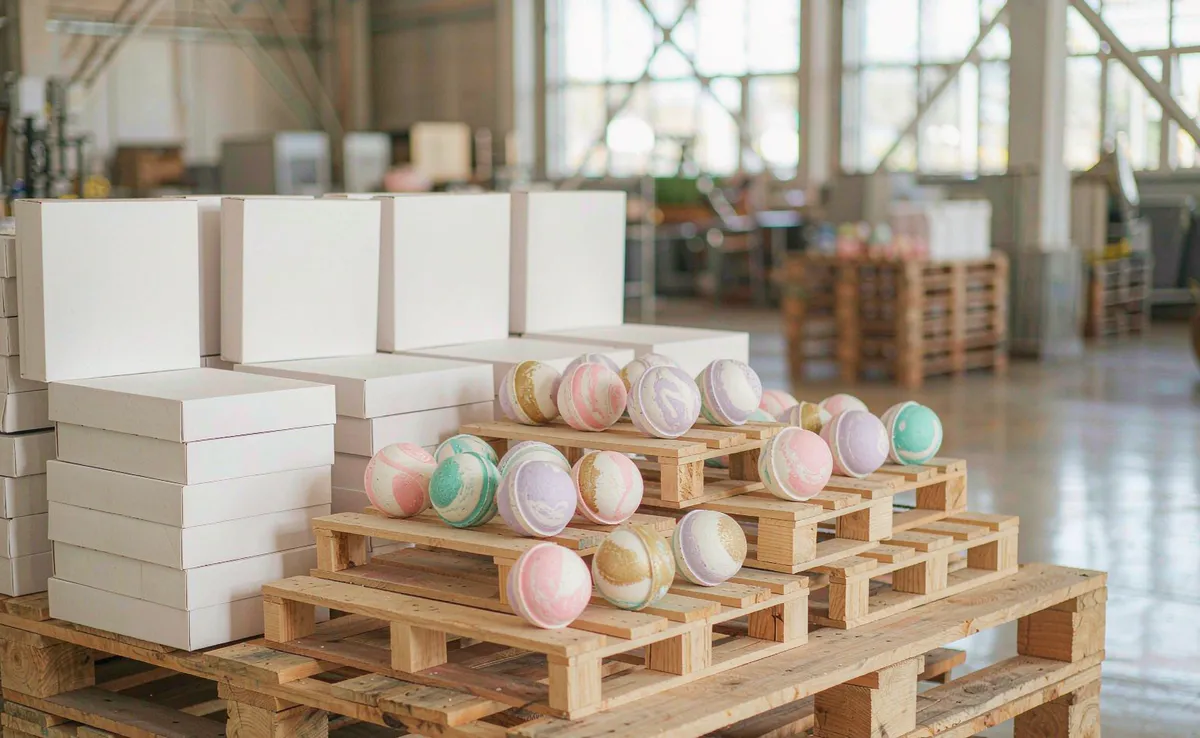
Bulk private label bath bombs for the European market are bought on three pillars: price, compliance and logistics. A viable program typically starts at 3,000–5,000 units per SKU, needs an EU Responsible Person and CPNP notification before the first sale, and depends on export-grade packaging to survive five weeks at sea. Here is how buyers handle all three.
Quanzhou Besthope Household Products Co., Ltd. (Besthope Bath) is an OEM/ODM manufacturer of bath bombs, bath salts, shower gels, body lotions, gift sets and scented candles, producing under GMP aligned with ISO 22716 cosmetics GMP, with amfori BSCI social-compliance audits, Walmart factory-audit experience, FDA-compliant documentation for US buyers and an in-house laboratory for formulation and stability testing. We run bulk private label programs for distributors and brand owners across Europe and Latin America; this guide compiles the questions European buyers ask us before their first container.
Why European Demand for Private Label Bath Bombs Keeps Growing
Private label is no longer the budget shelf in Europe — it is the growth engine. Across European fast-moving consumer goods, private label holds roughly 38.8% of value share, and in Spain it exceeds 47%, according to PLMA/NielsenIQ yearbook data. The same pull is visible in beauty: Grand View Research values the global private label cosmetics market at USD 10.6 billion in 2024, heading to USD 14.4 billion by 2030 (about 5.2% CAGR), and Europe is one of its anchor regions for private label cosmetics.
Bath bombs sit at the intersection of gifting and home self-care, with predictable seasonal peaks around Christmas, Valentine’s Day and Mother’s Day. For a European retailer or brand, sourcing bulk bath bombs under a private label agreement means shelf-ready product without building a factory of your own — provided price, compliance and logistics are engineered together, not negotiated one after the other.
Pricing: What Actually Drives the Unit Cost
Two buyers asking for “the same” bath bomb can receive quotes 40% apart. The difference is almost always in the specification behind the quote:
- Format and weight. Unit cost scales with size: a 150 g bomb uses more material, more pressing time and a bigger carton than a 60 g one. Fix the weight in grams before comparing prices.
- Fragrance system. IFRA-compliant synthetic fragrance versus pure essential oils; the load percentage drives both scent throw in the box and unit cost.
- Color and decoration. Multi-layer swirls, biodegradable glitter and dried botanicals each add manual steps. Embedded toys raise EU product-safety questions and are best avoided or fully documented.
- Packaging. Individual wrap, gift box, insert and export carton grade — packaging moves the unit price materially; a boxed gift SKU costs far more than a shrink-wrap-only finish.
- Order volume and tooling. Standard formulations typically run from 3,000–5,000 units per SKU, custom fragrance or color from 5,000–10,000 — the ranges detailed in our MOQ negotiation guide. Custom shapes require mold tooling, quoted separately.
Benchmark honestly: ask each shortlisted factory to quote the identical written specification — weight, fragrance load, color system, packaging — and to state which raw material grades the price assumes. A quote with no specification behind it is a guess, not a price.
EU Compliance: What Must Be in Place Before You Sell
Cosmetics sold in the EU are regulated by Regulation (EC) No 1223/2009, and four requirements must be resolved before a single bath bomb reaches a shelf:
- Responsible Person (RP). An EU-established person or company whose name and EU address appear on the label and who carries the legal duty for the product. Brands or importers usually take the role themselves or appoint a compliance service.
- Product Information File (PIF) and safety assessment (CPSR). The OEM supplies formulation data, COA/MSDS and IFRA certificates for every fragrance; a qualified safety assessor signs the CPSR.
- CPNP notification. The product must be notified through the EU’s CPNP portal before it is placed on the market. No notification, no legal sale.
- Correct labelling. INCI ingredient list, nominal content, batch number, RP name and address, plus required warnings — in the language or languages each member state demands.
Divide the work clearly in the OEM agreement: the factory feeds technical data and documents; the RP owns compliance on EU soil. Buyers who assume “the factory handles everything” discover at customs or at a marketplace audit that nobody actually holds the file.
Import Duties, VAT and Incoterms
Three money questions decide your landed cost:
- Duty. It depends on the HS code your product is classified under and its origin — check the exact rate for your code in the EU’s official Access2Markets portal rather than trusting a forwarded table.
- VAT. Import VAT applies at each country’s standard rate — 21% in Spain, for example — and is generally recoverable for VAT-registered importers under national rules; plan the cash flow.
- Incoterms. Quote and negotiate under the Incoterms 2020 rules (ICC). FOB keeps freight control with you, CIF bundles it, DDP shifts nearly everything to the seller at a premium. Confirm who books inspection, insurance and customs clearance.
Keep the document set airtight: commercial invoice, packing list and certificate of origin must match the declared goods. Mismatches between paperwork and cartons are the most common cause of customs delay on EU imports.
Shipping: Getting Bath Bombs to Europe Intact
Bath bombs are dense but fragile and moisture-sensitive, and many programs ship through summer heat. Sea freight from China to North Europe (Rotterdam, Hamburg) or the Mediterranean (Valencia) typically takes four to six weeks port to port, and the product must survive humidity, stacking loads and temperature swings the whole way.
- Export cartons with drop-test evidence and sensible stacking limits — bath bombs crush long before cartons do.
- Moisture protection: inner liners and a desiccant strategy designed for sea containers.
- Palletized loading instead of loose cartons for container programs.
- Pre-shipment inspection: an AQL-based third-party check (SGS, Intertek, QIMA) on weight, appearance, moisture and carton integrity — book it before the container is sealed, not after the goods arrive damaged.
On arrival, compare the delivered goods photo by photo against the signed golden sample before closing the order file. Weight, fizz, color, scent and packing are all judged against that one approved reference — not against a catalog photo.
From Inquiry to First Container
A realistic path runs: quotation against written specification → samples (5–15 working days with existing molds and stock fragrances, 2–4 weeks with custom work) → signed golden sample → mass production → pre-shipment inspection → shipment and document set. Reserve 10–14 weeks from first inquiry to goods on the water; in failed programs, most of the delay comes from changing the specification after sampling, not from production itself.
Frequently Asked Questions
What MOQ should I expect for private label bath bombs?
Standard formulations typically start at 3,000–5,000 units per SKU; custom fragrance, color or shape usually requires 5,000–10,000 units plus tooling for new molds. Multi-item gift sets carry item-level MOQs. Committed volume, simpler packaging or a vertically integrated factory can move these floors.
Who is the Responsible Person for bath bombs sold in the EU?
An EU-established party named on the label — usually the importing brand or a compliance service it appoints. The OEM factory supplies the technical file data, but legal responsibility for the PIF, the safety assessment and the CPNP notification sits with the RP, not the factory.
How much duty and VAT will I pay importing bath bombs into the EU?
It depends on the HS code, declared value and origin — check the exact duty rate in Access2Markets. Import VAT applies at the destination country’s standard rate (21% in Spain, for example) and is typically recoverable for VAT-registered importers under national rules.
How do I keep bath bombs from arriving damaged?
Specify export-grade, drop-tested cartons with moisture liners, palletized loading, and an AQL pre-shipment inspection by a third party before the container is sealed. Then compare the delivered goods against the signed golden sample on arrival.
Planning a bulk private label bath bomb program for the European market? Send your target country, volumes and written specification through the Besthope Bath contact page — our team will return a quotation, a sampling plan and the compliance documentation package described in this guide.
Quanzhou Besthope Household Products Co.,Ltd
Add:Chengnan Central Industrial Zone, Hui'an County, Quanzhou, Fujian, China
Tel:+86-595-87325398 Fax:+86-595-87325757
Email: luosonghuang@besthopebath.com Web: www.besthopebath.com
For more information, please leave us a message!
Copyright © 2022 Quanzhou Besthope Household Products Co.,Ltd. All Rights Reserved.
Images are sourced from the internet. If there is any infringement, please contact us for removal.