
 English
 Español
Candle Wicks and Vessels: A Selection Guide for Private Label Candle Brands
Source:www.besthopebath.com
|
Author:Besthope Bath
|
Published time: 2026-10-08
|
16 Views
|
🔊 Click to read aloud
❚❚
▶
|
Share:
The wick and the vessel decide how a private label candle burns before wax or fragrance are even chosen. This guide explains wick families, vessel materials and the burn-test routine OEM buyers should expect from a factory before committing to a first order.
Candle Wicks and Vessels: A Selection Guide for Private Label Candle Brands
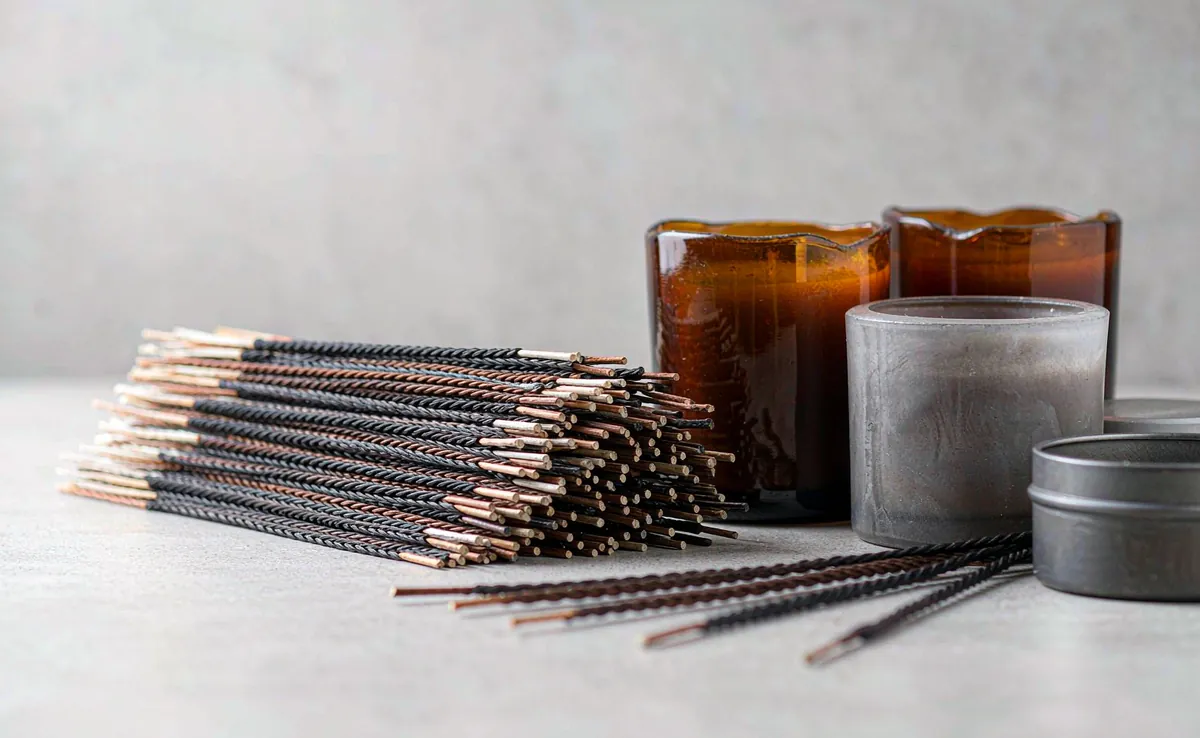
The wick and the vessel decide how a private label candle burns long before wax or fragrance enter the conversation. Cotton braided wicks suit most jar candles, wooden wicks add crackle and a premium cue, and the vessel sets burn behavior, safety and shelf price. Fix these two components first, then engineer wax and fragrance around them.
Quanzhou Besthope Household Products Co., Ltd. (Besthope Bath) is an OEM/ODM manufacturer of scented candles, bath bombs, bath salts, shower gels, body lotions and gift sets, producing under GMP aligned with ISO 22716 cosmetics GMP, with amfori BSCI social-compliance audits, Walmart factory-audit experience, FDA-compliant documentation for US buyers and an in-house laboratory for formulation and burn testing. Candle programs for retailers and brand owners in Europe and Latin America run through the same development funnel: brief, wick and vessel selection, wax matching, fragrance load, burn testing, compliance paperwork and production. This guide covers the first two decisions and the questions buyers ask most about them.
Why Wicks and Vessels Come First in Candle Development
Scented candles have moved from seasonal gift to everyday self-care, and buyers now judge a line on burn quality as much as on cold scent throw. Grand View Research sizes the global scented candles market at USD 6.1 billion in 2025, projected to reach USD 9.3 billion by 2033 at a 5.5% CAGR, with North America holding the largest revenue share (32.9% in 2025) in its latest report; the same research house projects European scented candle revenue growing from about USD 1.6 billion in 2025 to roughly USD 2.5 billion by 2033 in its regional outlook. Growth keeps attracting new brands, and new brands compete on the details a consumer can see and hear: a steady flame, a full melt pool, a vessel that earns its place on a bathroom shelf.
Those details are engineering decisions. A wick that is too small tunnels and drowns; one that is too large soots, mushrooms and overheats the vessel. A vessel that is too thick or too narrow chokes the melt pool; a decorative coating that is not heat-rated blisters on the first burn. Fixing wick and vessel early gives the wax blend and fragrance load a stable target to be engineered against, which is why our development funnel starts there rather than at the perfume shelf.
The Main Wick Families and Where Each Fits
Most private label programs draw on four wick families, and each earns its place for a different reason:
- Cotton braided wicks — the workhorse for container candles. Consistent flame, predictable behavior across paraffin, soy and blends, and the widest size range, which makes them the default for classic jar candles at retail price points.
- HTP and paper-cored wicks — a high-tensile core keeps the wick upright in deeper melt pools and softer waxes such as 100% soy, where all-cotton wicks can flop and drown late in the burn.
- Wooden wicks — a wide flame front, a soft crackle and a strong premium cue. They demand a vessel matched to their width, careful trimming guidance on the label, and more burn-test iterations before approval.
- Boosted specialty wicks — for high fragrance loads, dense wax blends or very wide vessels, a hotter or multi-wick configuration keeps the melt pool full where a standard wick would starve.
There is no universal wick chart that survives contact with a real formula. Wax blend, fragrance load, dye, vessel diameter and even ambient draft in the room shift the optimum. Treat every published sizing chart as a starting hypothesis, then let the burn bench decide.
How Wick Sizing and Burn Testing Actually Work
Specifying a wick is a test loop, not a lookup. In our laboratory a candidate wick starts from a calculated size based on vessel diameter and wax system, then runs repeated four-hour burn cycles. We check that the melt pool reaches the vessel wall on the first burn, that flame height stays stable without flickering or sooting, that no carbon mushroom forms on the wick tip, that the outer vessel surface stays safe to touch, and that the candle keeps burning cleanly at half depth instead of drowning. Each failure adjusts the wick family or size and the loop restarts; a spec is only approved when it passes on consecutive batches, including production wax, not just laboratory blends.
For the European Union, candles are consumer products covered by the General Product Safety Regulation (EU) 2023/988, which requires products placed on the market to be safe and supported by technical documentation and traceability. The European candle standards EN 15493 (fire safety classification) and EN 15494 (product safety labels) are the practical references buyers use for warnings and labeling. US gift-set programs add a second track: when the set contains body care, the FDA’s Modernization of Cosmetics Regulation Act (MoCRA) requires facility registration and product listing for the cosmetic items, alongside the candle’s own labeling duties. Our documentation package covers both tracks so one gift set can ship to both markets without rework.
Choosing the Vessel: Glass, Ceramic, Metal and Beyond
The vessel is the product’s silhouette, its safety envelope and a large share of its cost. Three material families dominate private label programs:
- Glass — the default for scented jar candles. Amber and frosted finishes hide wax discoloration and photograph well; clear glass shows the product. What matters technically is heat resistance and a proper annealing cycle, which is verified through our incoming inspection rather than taken on faith from a catalog.
- Ceramic — the premium pick. Weight and glaze depth signal quality, but the glaze must be heat-rated and the vessel wall thickness balanced so the melt pool still forms; a thick-walled decorative vessel can strangle an otherwise correct wick spec.
- Tin and metal — light, travel-friendly and economical, popular for gift sets and candles-in-a-tin promotions. Weight savings also compound across a pallet, which buyers appreciate once freight quotes arrive.
Two vessel decisions deserve attention before artwork is approved. First, mouth diameter drives wick configuration: as vessels get wider, a single wick eventually stops reaching the edges and the line moves to two wicks, which changes burn testing, wax load and cost at once. Second, lids — glass, wood or metal — act as premium cues and dust protection, but they add unit cost and pack-out volume, so we model them into the freight and landed-cost conversation early instead of treating them as an afterthought.
Cost, MOQ and Lead-Time Realities
Stock amber glass with standard cotton wicks is the fastest, lowest-MOQ route and suits first orders and market tests. Custom colored or printed glass, bespoke ceramic shapes and engraved wooden lids raise MOQ and add tooling, and they deserve the MOQ negotiation discipline we describe in our MOQ negotiation guide. Wick and vessel choices also interact with wax economics: a vessel that needs a hotter burn can push you toward wax blends with different cost behavior, as covered in our soy, coconut and paraffin wax guide. For holiday programs, vessel and lid lead times belong on the critical path alongside fragrance development, which is why we ask buyers to lock vessel direction first and let sampling proceed in parallel.
How many burn-test rounds does a wick need before approval?
Plan for three or more iterations across different wax batches: the first finds the family and rough size, the second trims performance at the edges of the melt pool, and the third confirms stability on production wax. High fragrance loads or wooden wicks usually add a round. A factory that skips this loop and ships a chart-derived wick is transferring burn-risk to your brand.
Can we mix vessel styles across one candle line?
Yes, and most retail lines do — a hero jar, a tin and a travel format share a brand but not a wick spec. Each new vessel is a new burn-test project: diameter, wall thickness and material change the melt-pool dynamics, so the wick is re-specified rather than copied. Budget sampling time accordingly when a launch brief includes multiple formats.
What MOQ should we expect for custom vessels?
Stock vessels carry the lowest MOQ and are the right call for a first order. Custom colors, prints or bespoke shapes typically start from a few thousand units per SKU once tooling and decoration minimums are counted, and the exact figure depends on finish and supplier capacity — we quote it per brief rather than as a fixed rule. If your volumes do not support those minimums yet, stock glass with a custom label is the standard intermediate step.
Planning a private label candle line? Send your target market, vessel preferences and estimated volumes through the Besthope Bath contact page — our team will return a wick and vessel shortlist matched to your wax system, burn-test results from comparable programs, and MOQ bands for stock and custom packaging options.
Quanzhou Besthope Household Products Co.,Ltd
Add:Chengnan Central Industrial Zone, Hui'an County, Quanzhou, Fujian, China
Tel:+86-595-87325398 Fax:+86-595-87325757
Email: luosonghuang@besthopebath.com Web: www.besthopebath.com
For more information, please leave us a message!
Copyright © 2022 Quanzhou Besthope Household Products Co.,Ltd. All Rights Reserved.
Images are sourced from the internet. If there is any infringement, please contact us for removal.